Industry & Location
Transporting Mining Equipment to the Bowen Basin: What You Need to Know
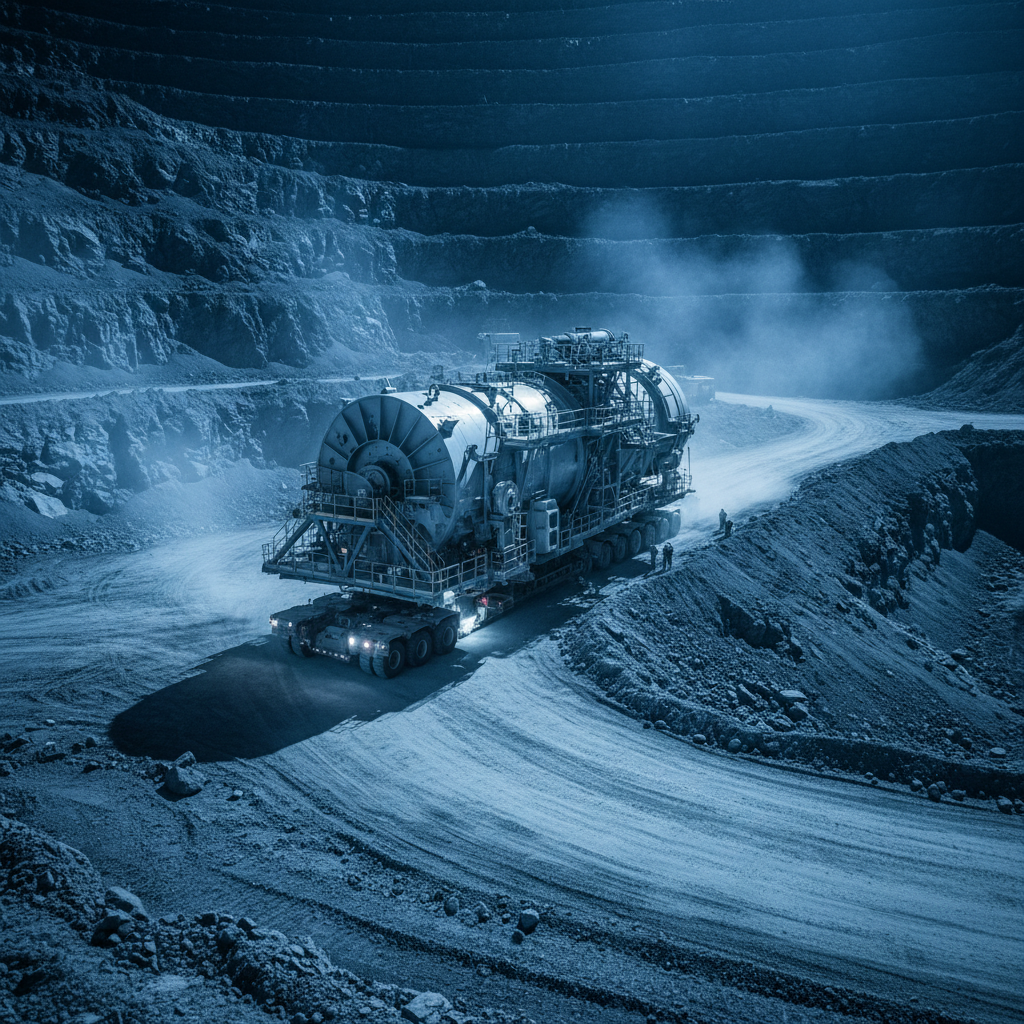
The Bowen Basin is the engine room of Australia's steelmaking coal industry, stretching roughly 600 kilometres from Collinsville in the north to Moura in the south. Dozens of active operations — from Moranbah and Dysart to Blackwater and Middlemount — depend on a constant flow of heavy machinery in and out of mine sites. Moving that equipment is a specialised job, and getting it wrong costs time, money, and potentially your mining contract.
If you're planning to transport mining equipment to or from the Bowen Basin in 2026, here's what you need to know.
Know the HVNL Changes That Took Effect in August 2026
The Heavy Vehicle National Law underwent major reforms on 1 August 2026. These changes affect anyone moving oversize or overmass mining equipment on public roads in Queensland:
- The new Heavy Vehicle Accreditation (HVA) scheme replaced the old NHVAS, with a tiered structure that places greater accountability on operators
- The 2026 Master Code provides an industry-driven framework for Chain of Responsibility compliance — and it applies to consignors (mine operators) as well as transport companies
- Penalties for mass, dimension, and load restraint breaches increased, with stronger enforcement powers for NHVR officers
- Safety Management Systems are now more prominent, requiring documented risk assessments for complex transport tasks
What this means in practice: if you're moving a 150-tonne excavator to a Bowen Basin mine, your transport provider needs to demonstrate compliance with the updated framework. At Heavy Haulage Brisbane, we've updated our systems to align with the 2026 HVNL reforms — every mining equipment transport job includes the required documentation, risk assessments, and accreditation evidence.
Plan for the Distance and Route Complexity
Most mining equipment heading to the Bowen Basin travels from Brisbane or port facilities at Gladstone through to Central Queensland. The Bruce Highway is the primary arterial route, but final delivery to mine sites often involves narrow council roads, mine access roads, and unsealed sections that require careful route assessment.
Key route considerations:
- Bridge load ratings on the Dawson Highway and Fitzroy Developmental Road — not all bridges can support heavy multi-axle combinations
- Mine site access restrictions — many sites have designated delivery windows and require escort vehicles from the gate to the pad
- Road trains and oversize combinations share these corridors, so timing and traffic management matter
- Wet season (November to March) can render some unsealed access roads impassable, requiring alternative routing or scheduling adjustments
We handle full route planning for every job, including bridge assessments and local council approvals. For mining equipment transport across Queensland, we coordinate directly with mine site logistics teams to ensure smooth delivery.
Match the Trailer to the Equipment
Bowen Basin mining operations use equipment ranging from 20-tonne wheel loaders to 200+ tonne haul trucks and draglines. Getting the right trailer combination is critical:
- Wheel loaders and small excavators (under 40T): Standard low loader with appropriate load restraint
- Mid-size excavators and dozers (40T–80T): Multi-axle low loader with hydraulic ramps
- Large mining excavators and haul trucks (80T+): Heavy-duty multi-axle trailer, often requiring modular configurations and crane-assisted loading
- Oversize buckets, booms, and attachments: Extendable trailers or flat-top combinations with independent escort vehicles
Each configuration has different permit requirements under the NHVR access framework. We assess your equipment dimensions and weight, then match the trailer and secure the necessary permits as part of our service.
Factor in Mine Site Protocols
Bowen Basin mine operators — including BHP Mitsubishi Alliance, Anglo American, Glencore, and Peabody — each have their own site access protocols. Common requirements include:
- Pre-delivery inductions for transport drivers
- Chlorine wash-down of equipment to prevent weed seed transfer between sites
- Designated delivery and unload zones, sometimes requiring mine site crane or forklift support
- Radio communication protocols on haul roads
- Drug and alcohol screening before site entry
These protocols add time to every delivery. Building them into your transport schedule from the start prevents costly delays at the mine gate.
Time Your Transport Around Mining Cycles
The Bowen Basin is going through a period of change in 2026. Argo Natural Resources recently acquired Bowen Coking Coal's operations, securing approximately 250 jobs and planning to restart metallurgical coal production. Anglo American is expanding remote-controlled mining technology across its Bowen Basin sites. Meanwhile, the Meandu Coal Mine extension was approved, adding another 500 jobs to the region.
What this means for equipment transport: demand for machinery relocation is shifting. New operations coming online need equipment moved in, while restructured sites may be relocating gear to other operations. Booking transport early — ideally 2–3 weeks ahead for oversize loads — gives you the best chance of securing your preferred delivery window.
Frequently Asked Questions
How long does it take to transport mining equipment from Brisbane to the Bowen Basin?
For standard-size equipment, allow 2–3 days including loading, transit, and mine site delivery. For oversize or overmass loads requiring permits and pilot vehicles, allow 5–7 business days from booking to delivery.
Do I need a separate permit for each mine site?
Permits are tied to the route and vehicle combination, not the destination. However, some mine access roads require additional local council approvals. We handle all permit applications as part of our service.
Can you transport equipment to active mine sites during operations?
Yes, but mine site logistics teams need advance notice — typically 48 hours minimum. We coordinate directly with site contacts to schedule deliveries within approved windows.
What happens if weather delays the transport?
We monitor weather conditions across the route and build contingency time into our schedules. If unsealed access roads are impassable, we work with the mine site to reschedule or find alternative routing.